Survivor: Cook Islands
The Survivor season divided by race lasted eight days
Survivor: Cook Islands split its 20 castaways into four tribes by race and ethnicity: Black, white, Hispanic and Asian American. CBS announced the format on August 23, 2006, and the season premiered September 14. The division lasted eight days, then the four tribes were merged into two mixed tribes.
Confirmed The format, the announcement date, the premiere date and the Day 8 merge are documented. Advertiser departures are also documented, but no company has ever named the race twist as its reason, and every company that commented denied any connection.
 Yul Kwon
  Oscar Lusth
  Rebekah Lee
  Sundra Oakley
 What the record shows
- Confirmed CBS announced on August 23, 2006 that the 13th season of Survivor would start its 20 castaways in four tribes divided by race and ethnicity: Black, white, Hispanic and Asian American. The season premiered on September 14, 2006.
- Confirmed The racial division lasted eight days. On Day 8 the four starting tribes, Aitutaki, Manihiki, Puka Puka and Rarotonga, were reduced to two mixed tribes, Aitutaki and Rarotonga.
- Confirmed Jeff Probst defended the format before it aired. He said there is "a history of segregation you can't ignore," and said that "80 percent of the people that apply are white," adding that the criticisms of the show's casting were valid.
- Confirmed New York City Councilman John Liu and the City Council's Black, Latino and Asian Caucus asked CBS not to air the season. Liu said "the idea of having a battle of the races is preposterous" and asked "how could anybody be so desperate for ratings?"
- Confirmed General Motors ended its sponsorship of the show. GM spokeswoman Ryndee S. Carney said "I think it's just a coincidence. I know it's not cause and effect," pointing to a budget shift toward live sports. CBS said GM had informed the network several months earlier and that the decision was unrelated to the controversy.
- Confirmed Advertising Age reported that more than half a dozen major advertisers, including General Motors and Coca-Cola, did not sponsor the season. The New York Times reported that The Home Depot, United Parcel Service and Campbell Soup also declined, that those decisions were made three months before the season began, and that they were unrelated to the racial format.
- Unverified That the race twist drove advertisers away. No company has said so on the record, no regulator or court examined the question, and the same reporting that documents the departures also carries the companies' denials. Nothing establishes a link either way.
What CBS actually announced
On August 23, 2006, CBS said the 13th season of Survivor would begin with its 20 castaways separated into four tribes by race and ethnicity: Black, white, Hispanic and Asian American. The season premiered on September 14, 2006. The tribes were named Manihiki, Rarotonga, Aitutaki and Puka Puka.
Jeff Probst gave interviews defending the plan before anyone had seen an episode. He described it as risky, said there is "a history of segregation you can't ignore," and made a point about the show's own casting history: "80 percent of the people that apply are white," he said, and television in general is white, so the criticisms the show had taken were valid. Those are his words, offered in defence of the format, not an independent finding about it.
The division lasted eight days
The single most misremembered fact about this season is how long the format actually ran. It ran for eight days of a 39 day game. On Day 8 the four race-based tribes were dissolved into two mixed tribes, keeping the names Aitutaki and Rarotonga. Manihiki and Puka Puka never appear again in the season's tribe records.
Three castaways had already been voted out by then. Everything the season is remembered for, the mutiny, the Aitutaki four, Yul Kwon's win, happened after the racial split was gone. The twist that generated a month of national argument was over before the season's fourth episode.
The objections, in the words of the people who made them
The loudest institutional objection came from New York City Hall. Councilman John Liu, with the Council's Black, Latino and Asian Caucus, asked CBS not to air the season at all. Liu said "the idea of having a battle of the races is preposterous" and asked "how could anybody be so desperate for ratings?"
CBS aired it anyway. There was no regulatory proceeding, no FCC action and no lawsuit. The record of this dispute is a record of public statements, which is why this page quotes them rather than summarising them into a verdict nobody actually delivered.
The advertisers left, and every one of them denied the reason
This is the part that gets retold wrong most often, and it is the part where the evidence points the other way. Advertisers were absent from the season. Advertising Age reported that more than half a dozen major sponsors, General Motors and Coca-Cola among them, did not buy in. The New York Times reported that The Home Depot, United Parcel Service and Campbell Soup also declined.
What no company said is that the race twist was why. GM's Ryndee S. Carney was direct about it: "I think it's just a coincidence. I know it's not cause and effect." She cited a shift of budget toward live sports and the difficulty of working a vehicle into a show set on an island. CBS said GM had told the network several months earlier and that the decision was unrelated to the controversy. The Times reporting put the other withdrawals three months before the season started and likewise unrelated to the format.
So the honest sentence is narrow. Sponsors left, and the sponsors who spoke all said the timing was coincidence. There is no filing, no internal document and no on-record corporate statement tying any departure to the race twist. Anyone who writes that advertisers boycotted the season over race is stating something no source supports.
A note on where the advertiser figures come from
This site reached the Advertising Age and New York Times reporting through an aggregated account rather than the original articles, and has not read either original. That is why the numbers appear here attributed to those outlets rather than stated flatly. The Probst quotes, the Liu quotes and the GM and CBS denials come from contemporaneous wire reporting that was read directly.
People in this story
-
 Yul Kwon Won the season; started on Puka Puka, the Asian American tribe
 -
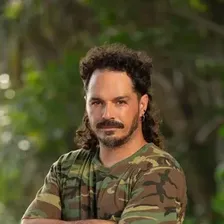 Oscar Lusth Runner-up; started on Aitutaki, the Hispanic tribe
 -
 Rebekah Lee Third place; started on Puka Puka
 -
 Sundra Oakley Fourth place; started on Manihiki, the Black tribe
 -
 Adam Gentry Started on Rarotonga, the white tribe
 -
 Parvati Shallow Started on Rarotonga
 -
 Jonathan Penner Started on Rarotonga
 -
 Candice Cody Started on Rarotonga
 -
 Anh-Tuan Bui Started on Puka Puka; moved to Aitutaki when the tribes merged on Day 8
 -
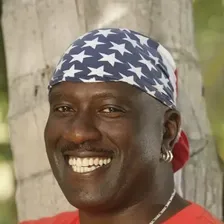 Sekou Bunch First castaway voted out; started on Manihiki
 -
 Virgilio Garcia Second castaway voted out; started on Aitutaki
 -
 Cecilia Mansilla Third castaway voted out, on Day 8; started on Aitutaki
Questions people ask
- Did Survivor really divide tribes by race?
- Yes. CBS announced on August 23, 2006 that the 13th season would start its 20 castaways in four tribes split by race and ethnicity: Black, white, Hispanic and Asian American. The season premiered on September 14, 2006.
- How long did the race-divided tribes last?
- Eight days. On Day 8 the four tribes were merged into two mixed tribes, Aitutaki and Rarotonga. Manihiki and Puka Puka do not appear in the season's tribe records after that point.
- Did sponsors drop Survivor because of the race twist?
- No company has ever said so. General Motors, The Home Depot, United Parcel Service and Campbell Soup were absent from the season, and each that commented said the decision predated the announcement and was unrelated to the format.
- What did Jeff Probst say about the twist?
- He defended it, calling it risky and saying there is "a history of segregation you can't ignore." He also said "80 percent of the people that apply are white" and that criticisms of the show's casting were valid.
- Did anyone try to stop the season from airing?
- Yes. New York City Councilman John Liu and the City Council's Black, Latino and Asian Caucus asked CBS not to air it. Liu called the idea of a battle of the races preposterous. CBS aired the season.
- Was there ever a legal or regulatory finding about the format?
- No. There was no lawsuit, no FCC proceeding and no regulatory action. The entire dispute exists as public statements from CBS, Probst, elected officials and advertisers.
Sources
- New 'Survivors' to Be Divided by Race Associated Press via Fox News, 2006-08-23
- NYC Officials Want New 'Survivor' Pulled Fox News, 2006
- GM Drops Sponsorship of 'Survivor,' but Not Over Racial Division of Contestants Associated Press via Fox News, 2006
- Survivor: Cook Islands, aggregating the Advertising Age and New York Times advertiser reporting and the Day 8 merge Wikipedia, 2026
- Revisiting The Race Wars Season Of 'Survivor' HuffPost, 2020
Checked on 2026-07-26. If something here is wrong or out of date, we want to know: get in touch.